
Are Felonies Eligible for Expungement?
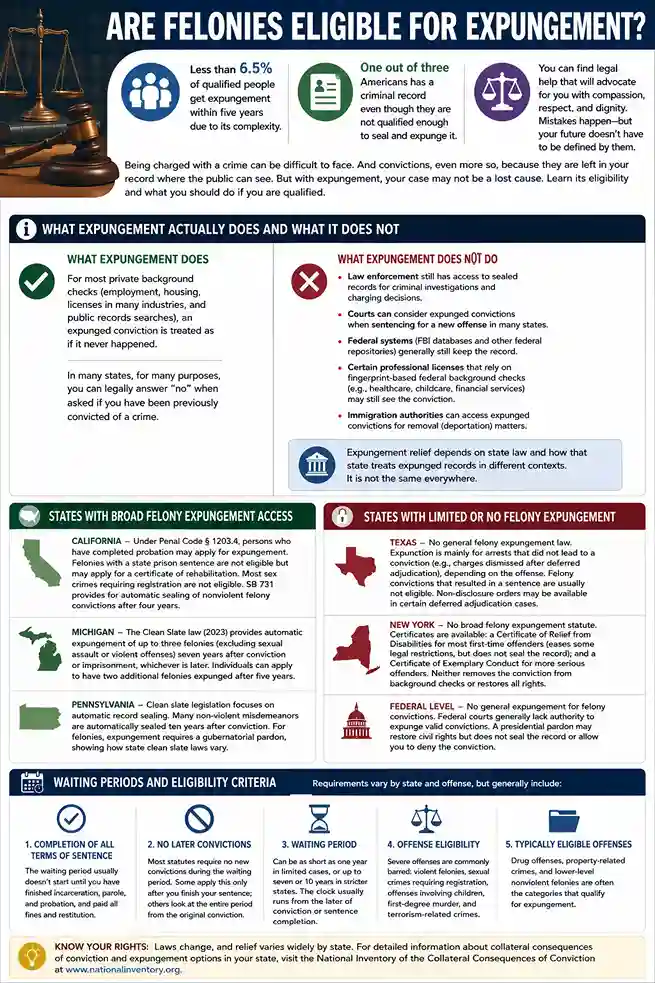
Did you know that less than 6.5% of qualified people can get expungement within five years due to its complexity? According to the Criminal Justice Policy group, it is reported that one out of three Americans possesses criminal records even though they are not qualified enough to seal and expunge them.
Being charged with a crime can be difficult to face. And convictions, even more so, because they are left in your record where the public can see. But according to https://www.dellisonlaw.com/, you can find legal help that will advocate for you with compassion, respect, and dignity. It’s understandable to make mistakes, especially when you don’t know any better. But what can you do when these mistakes can affect your plans and your future?
With expungement, your case may not be a lost cause. Learn its eligibility and what you should do if you are qualified.
What Expungement Actually Does and What It Does Not
Expungement is often talked about as erasing or wiping a criminal record. That description can be right for some uses, but it’s misleading in other settings. The real practical effect of expungement depends on what the specific state statute says and also how the state handles the expunged record across different situations, not just one.
When it comes to matters such as private background checks for employment purposes, applications for rental units, license requirements in many industries, and general public records searches, a conviction that has been expunged will be considered as having not occurred at all. In many states, and for many purposes, the convicted individual may respond “no” when asked whether they have been previously convicted of a crime.
But expungement doesn’t really erase the record for every use. Law enforcement agencies still hold onto access to the sealed material, mainly for criminal inquiries and charging determinations. In a lot of states, the courts can still look at an expunged conviction when sentencing someone later for another offense, even if the earlier case is sealed.
Then there are federal systems too, like FBI databases and federal criminal history repositories; those generally still keep the underlying record. And for some professional credentials, especially ones tied to fingerprint-based federal background checks, including a lot of healthcare, childcare, and financial services licenses, there’s a good chance the expunged conviction can still surface through the federal NICS or similar data sources.
On top of that, immigration authorities can retain access to expunged convictions for removal matters. So even if a drug conviction is sealed under state law, it may still affect deportability for a non-citizen under federal immigration law.
States With Broad Felony Expungement Access
Can you get a felony expunged in Georgia and other states? A handful of states have put in place pretty comprehensive expungement rules, where most felony convictions can be cleared out once someone finishes their sentence plus a waiting interval and then no new conviction comes up.
Under Penal Code § 1203.4, in California, persons who have completed their probation will be eligible to apply for expungement. Persons convicted of felonies for which there was a state prison sentence will not be eligible but may instead apply for a certificate of rehabilitation. Some offenses, such as the majority of sex crimes that require registration, are not eligible. Further, SB 731 provides for automatic sealing of records on nonviolent felony convictions after four years.
Michigan’s Clean Slate law, enacted in 2023, grants automatic expungement of up to three felonies that do not constitute sexual assault or violent offenses seven years after the time of conviction or imprisonment, whichever occurs last. Michigan has also made modifications in its process of applying for expungement, where individuals can get two more felonies expunged after five years.
Clean slate legislation in Pennsylvania deals more with automatic record sealing than expungement, whereby some non-violent misdemeanors may be automatically sealed ten years after conviction. For felonies, one has to go for a gubernatorial pardon for expungement to take place. This shows how different state clean slate laws are in their provisions.
States With Limited or No Felony Expungement
Texas does not really have some general felony expungement law. In Texas, expunction is mostly for arrests that never ended in a conviction, like cases where the charge gets dismissed after a probationary period in deferred adjudication situations, though it depends a lot on the offense.
If you got a felony conviction and it led to a sentence, it is usually not eligible for expunction. That said, a non-disclosure order can be an option in certain deferred adjudication matters, where the record gets sealed from public eyes but not from governmental review, and you still have to meet the eligibility rules.
New York also does not have a broad felony expungement statute. Instead, there are certificates. A certificate of relief from disabilities can apply to most first-time offenders, including people with felony convictions. It eases some automatic legal restrictions that come with the conviction, but it does not actually seal or expunge the record.
Then there is a certificate of exemplary conduct, usually available after a waiting period for more serious offenders, and it tends to have a wider reach, yet it still does not expunge the conviction. And neither one truly removes the conviction from background checks, nor do they automatically restore every lost right.
At the federal level, felony convictions generally don’t have a general expungement route either. Federal courts have disagreed a bit about whether some built-in judicial power allows expungement of federal convictions, but there is no federal statute that says you can do it.
The circuits that have taken up the issue have mostly said federal courts do not have the authority to expunge a valid conviction. A presidential pardon can restore civil rights after a federal conviction, but it does not seal the conviction record, and it does not allow the person to deny that the conviction happened.
Waiting Periods and Eligibility Criteria
In places that permit felony expungement, eligibility usually depends on you meeting certain waiting periods and conditions that are not the same everywhere and also vary a bit based on what offense it was. In general, people run into requirements like these:
- Completion of all terms of sentence: the waiting period often doesn’t start until the person has finished incarceration, parole, and probation, and that includes paying up any fines and restitution that were ordered.
- No later convictions: most statutes say you can’t have any new convictions during the waiting period. In some states, it is interpreted as only applying after you finish the sentence. Others look back at the whole stretch starting from the original conviction.
- Waiting period: It can be as short as one year in certain limited categories. It can go to seven or 10 years in places with stricter rules. The clock usually runs from the later of conviction or sentence completion.
- Offense eligibility: In every state, severe crimes like violent felonies, sexual crimes that trigger registration, offenses involving children, first-degree murder, and terrorism-related crimes are commonly barred for the felony expungement process. Drug offenses, property-related crimes, and lower-level nonviolent felonies, however, are often the categories people can qualify under.
You can find information about the collateral consequences and expungement possibilities in each state in the National Inventory of the Collateral Consequences of Conviction.