
Romeo and Juliet Law Explained: State Rules, Age Gaps, Exceptions & Penalties (2026)
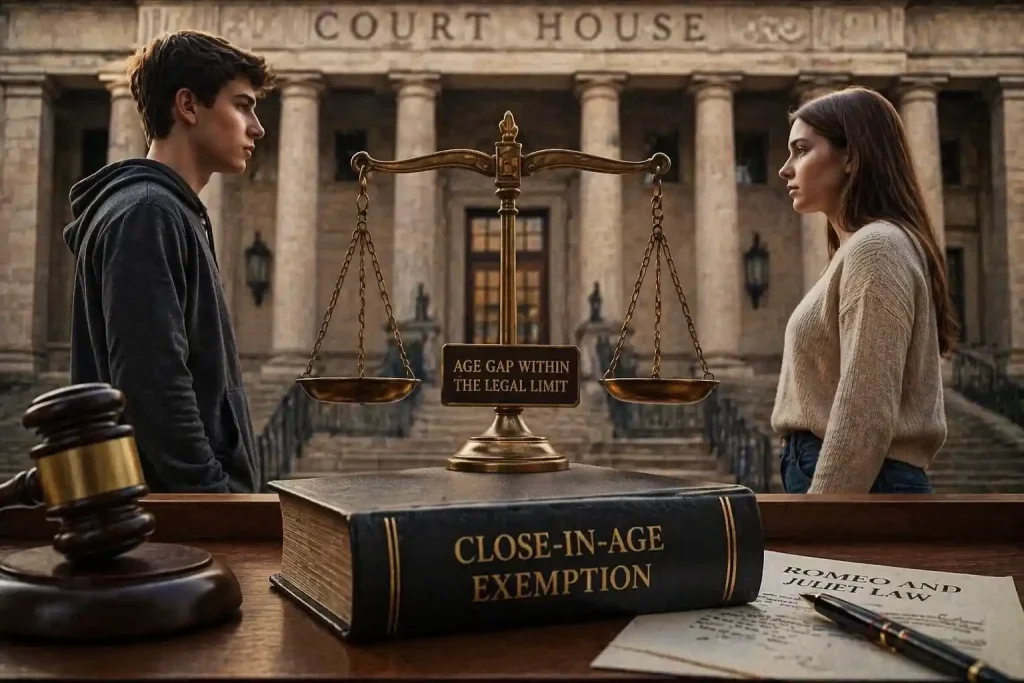
What Is the Romeo and Juliet Law?
The Romeo and Juliet law is a common term used to describe legal close-in-age exemptions that may protect teenagers or young adults from certain statutory sex crime charges when both individuals are near the same age and the relationship is consensual.
These laws were created because many states recognize a difference between:
- Predatory adult-minor conduct, and
- Consensual relationships between people close in age.
In simple terms, Romeo and Juliet laws may prevent a situation where two teenagers in a consensual relationship are treated the same as an adult exploiting a minor.
However, these laws are not the same in every state. Some states provide clear protections, some offer limited exceptions, and others have stricter rules.
Quick Answer
Romeo and Juliet laws are state-level legal protections that may reduce or prevent criminal penalties when two people close in age engage in consensual sexual activity, even if one person is under the standard age of consent. Rules vary by state, age gap, and circumstances.
Why Is It Called the Romeo and Juliet Law?
The term comes from Romeo and Juliet, where two young people fall in love despite age and family conflict.
Modern law uses the phrase informally to describe statutes designed to avoid severe penalties for close-in-age relationships.
It is a nickname, not always the official legal name written in statutes.
What Is Statutory Rape?
Statutory rape generally refers to sexual activity where one person is below the legal age of consent, meaning the law says they cannot legally consent.
Unlike cases involving force, violence, or coercion, statutory cases often focus on age rather than physical force.
That said:
- Force or coercion can create far more serious charges.
- Romeo and Juliet laws usually do not protect abusive conduct.
- Every case depends on state law.
What Is the Age of Consent?
The age of consent is the minimum age at which a person can legally consent to sexual activity under state law.
In the United States, this commonly ranges from:
- 16
- 17
- 18
Depending on the state.
A close-in-age exemption may apply even if one person is under that age.
Do All States Have Romeo and Juliet Laws?
No. Not all states use the same approach.
Some states have:
Clear Close-in-Age Exemptions
Specific legal age-gap protections written into law.
Partial Protections
Reduced penalties or narrower exceptions.
Stricter Systems
No meaningful close-in-age protection in some scenarios.
Because laws differ, it is essential to review the exact state statute.
How Romeo and Juliet Laws Usually Work
A typical law may protect someone if:
- Both parties are minors or young adults
- The relationship was consensual
- The age difference falls within a legal limit
- No authority relationship exists (teacher, coach, guardian, etc.)
- No force, threats, or coercion occurred
Common Age Gap Examples
Different states use different limits. Examples may include:
- 2 years apart
- 3 years apart
- 4 years apart
- 5 years apart
- Larger age gaps in limited states for older teens
There is no universal national rule.
States With Common Romeo and Juliet-Type Laws
Many states use some version of close-in-age exemptions, including examples often discussed such as:
- Colorado
- Texas
- Florida
- New Mexico
- Ohio
- Indiana
Exact protections vary significantly.
Romeo and Juliet Law in Colorado
Colorado is frequently cited for close-in-age exemptions.
General discussions often note:
- Younger teens may have narrower age-gap protections
- Older teens may have wider exemptions in some circumstances
Colorado law can be complex because age brackets matter.
Romeo and Juliet Law in New Mexico
New Mexico is often discussed for protections involving minors close in age.
Some legal commentary describes limited exemptions where:
- Both are minors
- Relationship is consensual
- Age difference remains within statutory range
Specific facts can change legal outcomes.
Romeo and Juliet Law in Texas
Texas is one of the most searched states for this topic.
Texas is known for having certain close-in-age defenses where:
- Parties are relatively close in age
- Conduct was consensual
- No registration or enhanced factors apply in some situations
Texas statutes are highly fact-specific.
Romeo and Juliet Law in Florida
Florida often appears in searches because of sex offender registry concerns.
Florida is known for procedures that may allow some individuals to seek relief from registration consequences under certain close-in-age circumstances.
When Romeo and Juliet Laws Do NOT Apply
Even where these laws exist, they usually do not protect situations involving:
1. Force or Violence
If coercion, assault, threats, or physical force occurred.
2. Large Age Gaps
If the difference exceeds the statutory exemption.
3. Authority Relationships
Examples:
- Teacher
- Coach
- Therapist
- Guardian
- Religious leader
4. Non-Consensual Conduct
If one party did not agree.
5. Child Exploitation Crimes
Images, trafficking, grooming, or abuse often fall outside such defenses.
Example Scenarios
Example 1: Likely Close-in-Age Situation
A 17-year-old and 16-year-old dating consensually.
Some states may treat this as protected or non-criminal.
Example 2: Higher Risk Situation
A 19-year-old and 14-year-old.
Many states would treat this far more seriously.
Example 3: Authority Problem
A 20-year-old coach and 17-year-old athlete.
Even if age is close, authority status may create criminal exposure.
Possible Penalties for Violations
If no exemption applies, penalties can be severe depending on state law:
- Misdemeanor charges
- Felony charges
- Jail or prison
- Probation
- Fines
- Mandatory counseling
- Sex offender registration
- Long-term record consequences
That is why close-in-age defenses matter so much.
Can Romeo and Juliet Laws Prevent Sex Offender Registration?
Sometimes, depending on the state and case outcome.
In some states, they may:
- Prevent conviction under certain charges
- Reduce offense severity
- Help avoid mandatory registration
- Allow petitions for removal later
But this varies greatly.
Common Legal Defenses in These Cases
A defense attorney may examine issues such as:
Close-in-Age Exemption
Does the state statute apply?
Lack of Evidence
Can the prosecution prove dates, ages, or conduct?
Consent (Where Relevant)
Consent does not override age laws but may matter in some contexts.
False Allegations
Disputes, family pressure, revenge, or misunderstandings can arise.
Constitutional or Procedural Defenses
Improper searches, interviews, or rights violations.
Romeo and Juliet Law vs Age of Consent
These are related but different concepts.
Age of Consent
The standard legal minimum age for consent.
Romeo and Juliet Law
An exception that may protect close-in-age relationships below that threshold.
Why These Laws Exist
Lawmakers often try to balance two goals:
Protect Minors
Prevent exploitation and abuse.
Avoid Overcriminalization
Prevent branding teenagers as sex offenders for consensual peer relationships.
This balance explains why laws differ politically and culturally across states.
Frequently Asked Questions
What is the Romeo and Juliet law?
It is a close-in-age legal exemption that may protect consensual relationships between people near the same age from certain statutory charges.
Is Romeo and Juliet law legal in every state?
No. Rules vary widely, and some states are much stricter than others.
Can a 17-year-old date an 18-year-old legally?
Often yes, but legality depends on the state, conduct involved, and specific facts.
Does Romeo and Juliet law stop sex offender registration?
Sometimes, but not always. It depends on the state and case outcome.
Is consent enough if someone is underage?
No. Age-of-consent laws can still apply even if both agreed.
Can a teacher use Romeo and Juliet law?
Usually no, because authority relationships often remove protections.
Important Warning
Internet summaries can be incomplete or outdated. A one-year age difference can matter differently from state to state. Even birthdays by a few days can affect charges.
Never rely only on general articles if someone faces criminal accusations.
What To Do If Charged
If you or someone you know is accused:
- Do not discuss details publicly
- Do not contact the accuser without legal advice
- Preserve evidence and messages
- Hire a licensed criminal defense attorney in your state immediately
Final Thoughts
The Romeo and Juliet law is one of the most misunderstood areas of criminal law.
Many people assume:
- “We were dating, so it’s legal.”
- “We were only two years apart.”
- “They agreed, so no problem.”
Those assumptions can be dangerously wrong depending on the state.
Close-in-age laws can offer important protections—but only when the facts fit the statute. Understanding your state’s rules is critical.
Disclaimer
This article is for general educational purposes only and is not legal advice. Laws change often, and results depend on jurisdiction and case facts. Consult a licensed attorney for advice on a specific situation.