
The Role of Contract Management in Strengthening Vendor Relationships
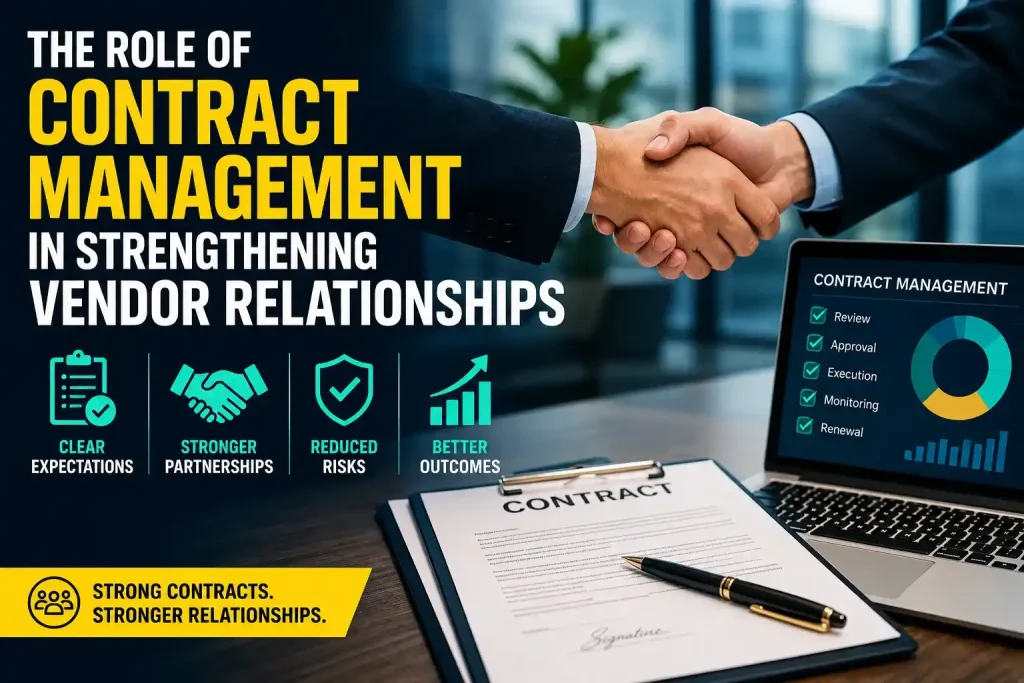
Vendor relationships rarely collapse all at once.
Usually, the breakdown starts with something smaller. A missed renewal notice. A payment dispute nobody caught early enough. Confusion over deliverables buried deep inside a contract both sides signed six months ago and immediately forgot about.
Then come the awkward emails.
“Just circling back on this.”
“Can you clarify expectations here?”
“We interpreted the agreement differently.”
Not exactly the foundation of a strong business partnership.
This is why effective contract management has become much more than an administrative process. For modern companies, it’s increasingly one of the key systems holding vendor relationships together behind the scenes.
Because vendors don’t just remember how quickly you signed the agreement. They remember how smoothly everything worked afterward.
Good Vendor Relationships Depend on Clarity
Businesses love talking about “strategic partnerships.” But partnerships become difficult very quickly when expectations are vague, communication is fragmented, or contract terms disappear into a forgotten folder after signing.
Strong vendor relationships rely on operational clarity:
- What was agreed to?
- Who owns what?
- When are deliverables due?
- What happens if timelines change?
- How are disputes handled?
- When does the agreement renew?
Without structured contract management, these details often become surprisingly difficult to track.
And when uncertainty enters a business relationship, frustration usually follows close behind.
This is one reason modern platforms like Ironclad are gaining attention across procurement, legal, and operations teams. Centralized contract systems help organizations maintain visibility, consistency, and accountability throughout the vendor relationship lifecycle.
Which sounds simple. But operational simplicity is rare in large organizations.
Disorganization Quietly Damages Trust
Most vendor relationships don’t fail because one side acted maliciously.
They fail because communication breaks down slowly over time.
A company misses a renewal deadline and accidentally auto-renews unfavorable pricing. A vendor invoices based on terms procurement didn’t realize had changed during negotiations. Legal approved one version of the agreement while operations referenced another.
Now everyone’s irritated.
Poor contract management creates these kinds of friction points constantly because information becomes fragmented across:
- inboxes
- spreadsheets
- shared drives
- disconnected departments
- outdated templates
The result is operational inconsistency. And vendors notice that quickly.
Reliable partnerships depend heavily on predictability. Vendors want confidence that agreements will be honored, approvals will move efficiently, and expectations won’t change unexpectedly halfway through the relationship.
Organizations with mature contract management processes tend to create that confidence more consistently.
Visibility Improves Collaboration
One underrated aspect of strong vendor relationships is transparency.
When both sides have clear visibility into obligations, deadlines, approvals, and contract status, collaboration becomes much smoother.
Modern contract management systems help create that visibility by centralizing agreements in searchable, trackable repositories. Teams can quickly access:
- current contract versions
- approval histories
- renewal timelines
- negotiated terms
- compliance requirements
- performance obligations
That accessibility matters more than many companies realize.
Without centralized visibility, vendor conversations often turn into investigative exercises:
“Wait, which version are we looking at?”
“Did legal approve that change?”
“Who signed off on this pricing adjustment?”
Nobody enjoys those meetings.
Centralized systems reduce confusion while helping internal teams communicate with vendors more confidently and consistently.
Faster Approvals Make Companies Easier to Work With
Every vendor has a mental list of clients they love working with.
And another list they absolutely do not.
Guess which category companies with slow, disorganized approval processes usually fall into.
One of the most valuable aspects of modern contract management is workflow automation. Platforms can automatically route agreements to the appropriate stakeholders based on contract type, department, spend thresholds, or risk level.
This speeds up:
- vendor onboarding
- procurement approvals
- contract renewals
- amendments
- payment authorization processes
For vendors, faster approvals signal operational competence.
And operational competence builds trust surprisingly quickly.
Nobody expects perfection. Vendors work with complex organizations every day. But they do appreciate clients who don’t require seventeen follow-up emails just to process a simple amendment.
A surprisingly low bar in some industries.
Standardization Reduces Conflict Before It Starts
Many vendor disputes begin with inconsistent contract language.
Different departments use different templates. Clauses vary from agreement to agreement. Negotiated changes aren’t tracked properly. Expectations become misaligned before work even begins.
Strong contract management systems reduce this risk through standardized workflows and approved templates.
That consistency helps ensure:
- terms are clearly defined
- obligations are documented properly
- approval processes remain consistent
- fallback language is controlled
- negotiated changes are tracked accurately
In practical terms, this means fewer misunderstandings later.
And fewer misunderstandings generally lead to stronger, longer-lasting vendor relationships.
Funny how that works.
Better Relationships Create Better Business Outcomes
Here’s something companies occasionally overlook: vendors are not interchangeable machines.
Strong vendor relationships create real operational advantages:
- faster issue resolution
- better collaboration
- improved service quality
- greater flexibility during disruptions
- stronger negotiation outcomes
- longer-term strategic alignment
Poor relationships create the opposite.
That’s why contract management matters beyond legal compliance or administrative efficiency. It directly influences how businesses interact with the external partners they depend on every day.
The companies that manage contracts well tend to create smoother vendor experiences overall. Expectations stay clearer. Communication improves. Problems get resolved faster because everyone is working from the same information.
Which sounds obvious. Yet many organizations still operate with fragmented systems that practically manufacture avoidable confusion.
Contract Management Is Really About Operational Trust
At first glance, contract management sounds procedural. Technical. Maybe even slightly dull.
But underneath the process is something much more important: trust.
Vendors want reliability. Businesses want accountability. Both sides want clarity around expectations, obligations, and timelines.
That’s exactly what strong contract management helps create.
Platforms like Ironclad are helping organizations modernize how contracts move through procurement, legal, finance, and operations, not just to reduce paperwork, but to create stronger, more transparent business relationships overall.
Because in the end, vendors remember how companies operate long after the signatures are complete.
Especially the difficult ones.