

What Are the Treatment Options for Birth Injuries?
Did you know that birth injuries occur in 6-7 per 1,000 live births, affecting approximately 30,000 babies annually in the US? Cerebral palsy, one of the most serious conditions associated with birth injuries, affects about 1 in 345 children.
Common birth injuries include brachial plexus injuries, fractures, oxygen deprivation, cerebral palsy, and nerve damage caused by difficult deliveries or medical complications during childbirth.
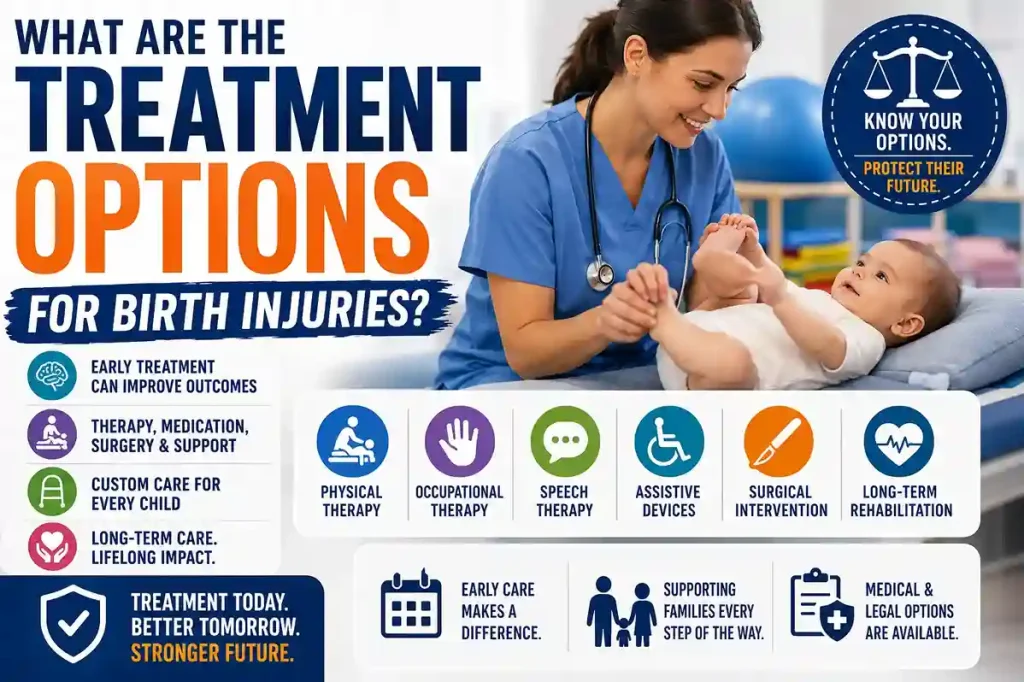
Treatment options for birth injuries depend on the type and severity of the injury. This may include physical therapy, occupational therapy, medications, surgery, assistive devices, and long-term rehabilitation programs.
There are available treatment options to help families make informed medical and legal decisions after a birth injury diagnosis. Let’s look into them.
Hypoxic-Ischemic Encephalopathy: Therapeutic Hypothermia and Beyond
Hypoxic-ischemic encephalopathy is the worst noted birth injury that a newborn may have. This is caused by the lack of oxygen supply to the brain from the pre-delivery period up to delivery and even after delivery. This could have been prevented with adequate monitoring of patients and prompt performance of cesarean deliveries.
The technique of therapeutic hypothermia is commonly known as “cooling therapy.” This is the standard practice used when HIE is considered mild to severe in newborns at term or near term. The infant’s body temperature is reduced to between 33 and 34 degrees Celsius for 72 hours before starting to increase it again.
The body cooling process stops the second stage of brain cell death, which occurs after the first phase of brain cell death that follows oxygen deprivation. The therapy is effective only when it starts within six hours after birth because any delay reduces its positive effects.
But even though therapeutic hypothermia greatly reduces the chances of death or neurodevelopmental disability, there are still a large number of infants who suffer from aftereffects. HIE survivors are at greater risk of having cerebral palsy, epilepsy, delayed development, mental disability, and impaired vision or motor skills.
HIE treatment in Florida costs hospitals more than $160,000 per patient for their first hospital stay. They do not include the expenses that hospitals will pay for patients throughout their entire life because of remaining disabilities.
Brachial Plexus Injuries: Physical Therapy, Surgery, and Timing
Injury to the brachial plexus during childbirth means damage to the nerves responsible for connecting the spinal cord to the linking extremities due to trauma from the delivery process. These are the shoulder, arm, and hand.
This injury is experienced by 1 to 3 per 1,000 babies born, and the underlying cause is shoulder dystocia. This is a situation where the shoulder of the baby gets entrapped against the maternal pelvic bone during childbirth.
This type of injury occurs when doctors apply more pulling pressure on the baby’s head and neck during the emergency than they should, thus damaging the nerves permanently. The improper use of forceps and vacuum extractors is a recognized method that leads to these injuries.
Physical therapy
Physical therapy serves as the main treatment option for patients with mild to moderate brachial plexus injuries who can start therapy at three weeks of age. The therapy program aims to maintain joint flexibility while stopping contractures from developing and helps the patient gain strength in their shoulder and arm and hand during the process of nerve injury recovery.
Physical therapy helps many children with neurapraxia, which represents the mildest brachial plexus injury. In this case, their nerve remains unbroken but stretched to achieve significant or complete recovery.
When patients with neuromas and ruptures experience recovery plateaus from their injuries, they need to undergo surgical procedures because their nerves remain connected to the spinal cord.
Surgical intervention
Surgical intervention becomes necessary for severe brachial plexus injuries that fail to demonstrate proper recovery after four to nine months of age. The process of nerve repair or reconstruction uses nerve grafts, which medical personnel extract from other body regions to establish nerve connections with intact nerves.
Avulsion injuries, the most serious form, involve the nerve root being torn completely from the spinal cord. The original attachment site cannot be used for repair, so the procedure requires nerve transfer operations. The person will experience some permanent functional restrictions after the surgery, but occupational therapy and physical therapy will continue as part of their extended treatment program.
According to San Diego birth injury lawyer Ken Sigelman, J.D., M.D., when birth injuries result from accidents, violence, or other external variables, the matter may evolve into a personal injury or wrongful death lawsuit. And if a medical mistake results in a birth injury, the medical provider responsible for the mistake or any other negligence in treatment is liable for medical negligence.
Cerebral Palsy: Management of a Lifelong Condition
Cerebral palsy stands as the leading motor disability among children and serves as a major long-term consequence of birth-related injuries. The condition arises when brain development suffers because of oxygen deprivation during delivery or shortly thereafter. In addition, untreated maternal infections and severe jaundice and birth-related traumatic brain injuries can also cause this condition.
Even though there is no way to cure cerebral palsy, by using the comprehensive treatment approach, doctors will be able to increase the mobility level of a child and his/her general quality of life. The treatment plan for children with cerebral palsy is designed according to their health problems. This includes epilepsy, communication problems, vision problems, and other conditions.
Core treatment categories for cerebral palsy include:
- Physical therapy establishes treatment goals that improve a patient’s mobility and posture and strength and coordination abilities
- Occupational therapy establishes treatment goals which enable patients to develop their fine motor skills needed for completing daily tasks
- For communication and swallowing difficulty caused by cerebral palsy, use speech and language therapy
- The medications that treat spasticity include oral baclofen and botulinum toxin injections and intrathecal baclofen. These are delivered through implanted pumps to treat severe cases
- Orthopedic surgery treats contractures and hip dislocations and scoliosis, which occur during the child’s growth process
- The system provides assistive technology, which contains communication devices and mobility aids and adaptive equipment
The cost associated with caring for a child that has cerebral palsy can be quite high; it usually exceeds a million dollars when you factor in the costs of treatment, equipment, adaptations to the house, help, and loss of future income for both the child and parent.
Spinal Cord and Head Injuries: Emergency Care and Long-Term Rehabilitation
Birth-related spinal cord injuries are less common than other birth injuries but are among the most severe. Most cases are caused by excessive neck traction or rotation during delivery, improper use of forceps or vacuum extractors, and unmonitored breech delivery practices. The cervical spinal cord becomes injured, which results in respiratory problems and arm and leg paralysis and death, which occurs in extreme cases.
The initial treatment process requires three objectives, which include stabilizing the patient and protecting against additional injuries and providing respiratory assistance. The rehabilitation process requires a team of experts who work together to help the child achieve better mobility and better bladder and bowel control and maintain skin health while developing normally.
Babies may develop brain injuries at the time of delivery due to various reasons such as the use of forceps, vacuum extraction, and excessive pressure on the baby’s head.
The impact of these brain injuries depends upon the severity of the injury because it may either resolve or result in lifelong impacts that will be noticed in the course of development.
Distinguishing Unavoidable Complications From Preventable Injuries
The majority of birth injuries occur because medical professionals fail to deliver proper care. Certain birth injuries develop because of events that medical professionals cannot manage. The most severe birth injuries occur when medical practitioners violate established obstetric standards through their oxygen deprivation practices and their use of excessive force, which causes brachial plexus injuries and their delivery instrument handling errors.
Medical negligence in the birth injury context may include:
- The medical staff failed to monitor fetal heart rate during labor, which resulted in them not detecting distress signs.
- The medical team postponed their emergency cesarean section decision despite fetal monitoring results showing an immediate surgical requirement.
- The medical professionals used incorrect methods to treat shoulder dystocia because they applied excessive lateral force to the fetal head.
- The medical team used forceps and vacuum extractors incorrectly because they applied the devices during situations when they should not have been used and they applied excessive extraction force.
- The medical team failed to diagnose and treat maternal infections, which endangered the infant’s neurological growth.
- The medical team did not assess and treat known risk factors, which included large fetal weight and maternal diabetes and past delivery complications.
When a birth injury falls into one of these categories a medical malpractice claim may be available against the delivering physician the hospital or other members of the care team.
The Cost of Birth Injury Care and What Legal Claims Can Cover
The serious birth injury will create financial costs for your family, which will not stop at a single medical bill. The costs will build up through multiple years, which include payments for specialist medical visits and therapy treatment and prescription drugs and required medical devices and educational assistance and necessary home changes and, in most situations, adult care support. The medical expenses for severe cerebral palsy and permanent brachial plexus palsy require patients to pay costs throughout their entire lives.
The purpose of a birth injury malpractice lawsuit is to obtain compensation that matches the complete financial burden on the victim, starting from their first hospital stay. The damages in this case include medical expenses from past and future treatments, costs for ongoing therapy, rehabilitation needs, adaptive equipment, home modifications, lost earning capacity of the child, and damages for pain and suffering, and in some instances, damages for the caregiving burden that the parents had to handle.
Treatment and Legal Options Exist Side by Side
Families facing a birth injury diagnosis need to find specialists who can create their child’s treatment plan while they investigate whether the injury should have occurred. The two tracks function independently because pursuing one track does not need to wait until the other track is complete.
Medical professionals require diagnosis and specialty referrals to commence proper treatment, which needs to start with suitable early intervention methods for their specific injuries. Families whose child needs extensive permanent care can use birth injury claims to receive financial compensation, which allows them to cover their child’s required medical treatment.