

Emotionally Immature Parents: Signs, Childhood Effects, and How to Heal
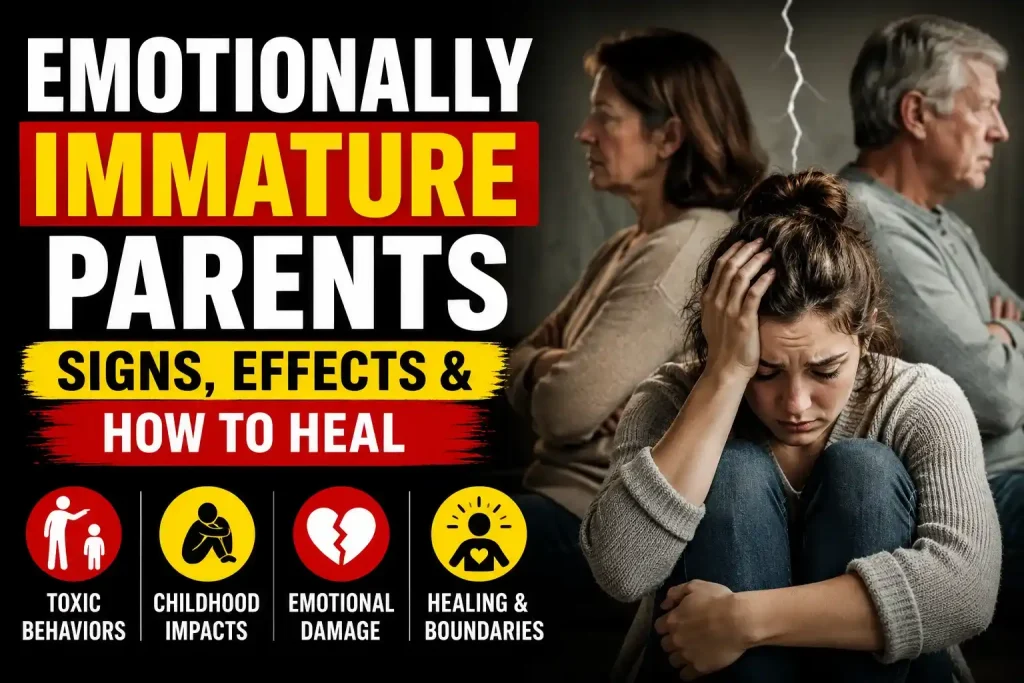
Many adults grow up believing their childhood struggles were “normal” until they begin noticing patterns of emotional neglect, manipulation, criticism, or emotional instability in their relationship with their parents.
The truth is that not every harmful parent is physically abusive. Some parents create emotional damage through immaturity, inconsistency, emotional unavailability, or self-centered behavior. These patterns can deeply affect a child’s confidence, emotional development, relationships, and mental health long into adulthood.
The concept of emotionally immature parents became widely recognized through the work of Lindsay Gibson and her influential book:
Adult Children of Emotionally Immature Parents
This article explores:
- what emotionally immature parents are
- common signs and behaviors
- different parenting types
- emotional effects on children
- healing strategies for adults
- healthy boundaries and emotional recovery
Understanding these patterns can help people stop blaming themselves and begin healing in realistic, healthy ways.
What Are Emotionally Immature Parents?
Emotionally immature parents are adults who struggle with:
- emotional regulation
- empathy
- accountability
- emotional intimacy
- healthy communication
Rather than supporting their child’s emotional growth, they often prioritize:
- their own emotions
- personal comfort
- control
- validation
- emotional needs
Children raised by emotionally immature parents often grow up feeling:
- emotionally unseen
- invalidated
- anxious
- overly responsible
- emotionally exhausted
The problem is not always obvious abuse. Sometimes the emotional damage comes from chronic emotional neglect and instability over many years.
Signs of Emotionally Immature Parents
Emotionally immature parents often display recurring behavioral patterns.
Common signs include:
Emotional unpredictability
Their moods change suddenly, making children feel anxious or emotionally unsafe.
Lack of accountability
They blame others when problems occur and rarely admit fault.
Self-centered behavior
Conversations and family dynamics revolve around their emotions and needs.
Emotional invalidation
They dismiss feelings with comments like:
- “You’re too sensitive.”
- “Stop overreacting.”
- “That never happened.”
Poor boundaries
They interfere excessively in their children’s personal choices and emotional life.
Control and criticism
Some emotionally immature parents attempt to control children through guilt, criticism, shame, or emotional pressure.
Difficulty with empathy
They struggle to truly understand or emotionally support others.
These patterns often continue well into adulthood unless healthy boundaries are established.
The Four Types of Emotionally Immature Parents
According to Lindsay Gibson, emotionally immature parents generally fall into four categories.
Emotional Parents
Emotional parents are consumed by their own feelings and emotional reactions.
They may:
- become overwhelmed easily
- react dramatically
- seek constant reassurance
- swing between closeness and withdrawal
Children of emotional parents often feel responsible for stabilizing the parent emotionally.
This creates:
- anxiety
- hypervigilance
- emotional exhaustion
within the child.
Driven Parents
Driven parents often appear successful and responsible externally.
However, they tend to:
- overcontrol their children
- prioritize achievement
- focus heavily on perfection
- interfere excessively in personal decisions
These parents may push children toward:
- academic success
- status
- productivity
while neglecting emotional connection.
Children raised this way often struggle with:
- perfectionism
- self-worth issues
- fear of failure
- chronic stress
Passive Parents
Passive parents avoid emotional conflict and difficult situations.
They may appear kind or empathetic but often fail to:
- protect their children
- enforce boundaries
- confront abusive behavior
Passive parents frequently prioritize peace over emotional safety.
Children may feel:
- abandoned emotionally
- unsupported
- invisible
especially when another dominant parent creates dysfunction.
Rejecting Parents
Rejecting parents seem emotionally detached or uninterested in parenting.
They may:
- isolate themselves
- criticize constantly
- avoid affection
- react harshly to emotional needs
Children raised by rejecting parents often experience:
- emotional loneliness
- deep insecurity
- fear of intimacy
- low self-esteem
This parenting style can create long-lasting emotional wounds.
How Emotionally Immature Parents Affect Children
Children raised in emotionally unhealthy homes often adapt by becoming:
- people pleasers
- emotional caretakers
- perfectionists
- conflict avoiders
Many sensitive children learn to suppress their own emotions in order to manage the emotional atmosphere of the household.
Over time, this can damage:
- self-trust
- emotional confidence
- intuition
- identity
- personal boundaries
As adults, they may struggle with:
- anxiety
- burnout
- emotionally unhealthy relationships
- guilt
- emotional dependency
Many also become highly focused on other people’s needs while neglecting themselves.
Emotional Neglect and Loneliness
One of the most damaging outcomes of emotionally immature parenting is:
emotional loneliness
A child may have:
- food
- shelter
- education
- physical care
yet still feel emotionally abandoned.
Emotional loneliness occurs when children do not feel:
- emotionally understood
- emotionally supported
- emotionally safe
This often creates adults who secretly feel:
- unworthy
- unseen
- emotionally disconnected
even within relationships.
Why Children Keep Hoping for Change
Many adult children continue hoping their parents will eventually:
- apologize
- change emotionally
- become supportive
- finally understand them
This hope is extremely common.
However, emotionally immature parents often lack the emotional awareness necessary for deep emotional repair.
Healing usually begins when adults stop waiting for emotional transformation from their parents and begin focusing on:
- their own emotional growth
- self-protection
- healthy relationships
- emotional independence
Healing From Emotionally Immature Parents
Healing does not always require cutting parents off completely.
Instead, healing often involves:
- emotional separation
- boundary development
- realistic expectations
- emotional self-protection
The goal is learning how to interact without sacrificing emotional health.
Healthy Healing Strategies
Several approaches can help adults heal from emotionally immature parenting.
Managing Instead of Engaging
Emotionally immature parents often create exhausting emotional arguments.
Instead of trying to “win” emotionally, healthier approaches may involve:
- remaining calm
- avoiding escalation
- limiting emotional engagement
Simple responses like:
- “I’m not sure.”
- “I’ll think about that.”
- “I don’t have anything to say about that right now.”
can reduce conflict and emotional exhaustion.
Setting Emotional Boundaries
Healthy boundaries help protect emotional energy.
Boundaries may include:
- limiting emotional discussions
- reducing contact frequency
- refusing guilt-based manipulation
- ending harmful conversations calmly
Boundaries are not punishments. They are tools for emotional safety.
Relatedness vs Relationship
One powerful concept from Adult Children of Emotionally Immature Parents is the difference between:
- relationship
- relatedness
A healthy relationship involves:
- emotional intimacy
- empathy
- mutual emotional care
Relatedness simply means maintaining manageable contact without expecting emotional depth.
This perspective helps many adults stop expecting emotionally immature parents to suddenly become emotionally mature.
Can Emotionally Immature Parents Change?
Some emotionally immature parents can improve if they:
- develop self-awareness
- seek therapy
- accept accountability
- genuinely want growth
However, many never fully change because emotional immaturity often protects fragile self-esteem and deeply rooted coping mechanisms.
Adults must avoid sacrificing their own emotional well-being while waiting for change that may never happen.
Should You Cut Off Emotionally Immature Parents?
This decision is deeply personal.
For some people:
- limited contact works best
For others:
- strict boundaries are enough
And for some:
- complete separation becomes necessary for safety and healing
There is no universal answer.
The healthiest decision is the one that protects:
- emotional stability
- mental health
- long-term well-being
without unnecessary guilt or self-abandonment.
Therapy and Emotional Recovery
Therapy can help adult children:
- rebuild self-worth
- identify unhealthy patterns
- process emotional neglect
- strengthen boundaries
- develop emotional independence
Healing is often less about changing parents and more about reconnecting with:
- your identity
- emotional safety
- self-trust
- authentic needs
Why This Topic Matters Today
Conversations about emotionally immature parents have grown significantly online because many adults are finally recognizing childhood emotional neglect that was previously normalized.
Modern psychology increasingly recognizes that emotional neglect can be just as damaging as more visible forms of dysfunction.
Understanding these patterns allows people to:
- stop internalizing blame
- recognize unhealthy dynamics
- break generational cycles
- create healthier relationships moving forward
Final Thoughts
Emotionally immature parents can deeply affect a child’s emotional development, identity, and adult relationships.
Whether the parent is:
- emotional
- driven
- passive
- rejecting
the result often includes emotional loneliness, anxiety, people-pleasing, and difficulty trusting oneself.
Healing begins when adults stop trying to earn emotional validation from emotionally unavailable parents and begin focusing on:
- self-awareness
- emotional boundaries
- personal growth
- healthier relationships
You cannot force emotionally immature parents to change. But you can learn to protect your emotional well-being, redefine the relationship on your own terms, and build a healthier life moving forward.


