
Types of Vehicular Bridges Explained: A Complete Guide
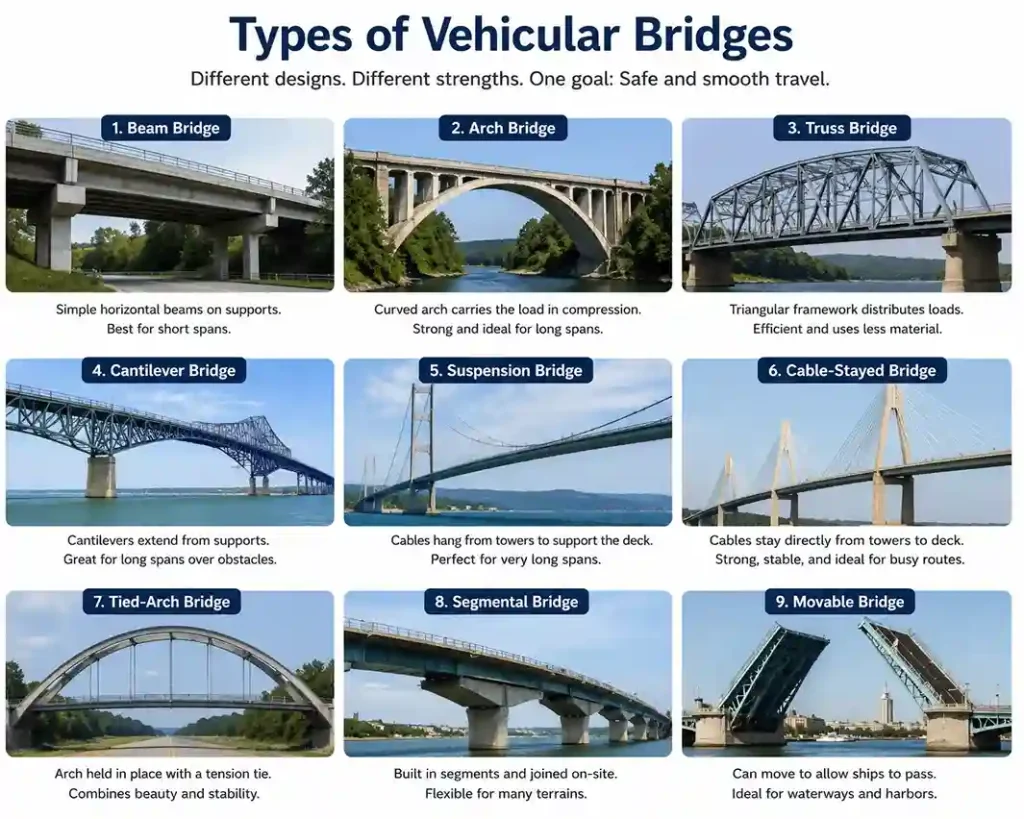
Vehicular bridges are key parts of modern transport systems. They help cars, trucks, and buses cross rivers, valleys, and roads safely. This guide explains the main types in simple terms.
Each bridge type has a unique structure and purpose. Some are built for short spans, while others cover long distances. Understanding these bridges can help in choosing the right design for various applications.
Read on.
What Are Vehicular Bridges?
Vehicular bridges are built to carry traffic, including cars, trucks, and buses. They vary greatly in design, materials, and size, reflecting the specific requirements of their locations. The main goal of these structures is to provide safe and reliable transportation routes for all types of vehicles.
Different designs of vehicular bridges have impact factors like durability, maintenance, and construction costs. Engineers consider these factors carefully when planning a bridge project. Furthermore, the choice of design also affects the environmental impact of the bridge.
Beam Bridges
Beam bridges are among the simplest and most common types of vehicular bridges. They consist of horizontal beams supported by vertical columns at either end, distributing weight effectively. Their straightforward design makes them economical and easy to construct.
These bridges are ideal for spanning short distances and are often used for highway overpasses. A common material used in beam bridges is concrete or steel, which ensures strength and longevity. However, their limitations come with longer spans, which may require additional support.
Arch Bridges
Arch bridges feature a distinctive curved structure that supports loads primarily through compression. The design allows these bridges to span significant distances while providing a strong, stable foundation. This type of bridge is often seen in picturesque locations due to its attractive appearance.
Materials like stone, concrete, or steel are commonly used in arch bridges, allowing for both durability and aesthetic appeal. They are especially beneficial in areas with difficult terrain, as their shape can handle heavier loads efficiently. Furthermore, arch bridges often require less material than other designs, promoting environmental sustainability.
Truss Bridges
Truss bridges utilize a framework of interconnected triangles to distribute loads effectively. This design allows for larger spans while maintaining minimal material usage. They are popular in many engineering applications, including railways and highways.
The strength of truss bridges comes from the triangular units, which help to reduce stress on the structure. These bridges can be made from various materials, including steel and wood, allowing for versatility in design. Moreover, the construction of truss bridges can often be achieved off-site, saving time and resources.
Cantilever Bridges
Cantilever bridges are unique structures that use cantilevers, or beams supported only on one end. This design allows for long spans without the need for additional supports. They are particularly useful in challenging locations, such as river crossings.
With their innovative design, cantilever bridges can carry heavy loads while maximizing available space. They often employ steel or reinforced concrete for their builds, contributing to their strength and durability. Additionally, these bridges present a modern aesthetic that enhances urban environments.
Suspension Bridges
Suspension bridges are characterized by cables suspended between towers, supporting the bridge deck. This design allows for long spans, making it ideal for crossing large bodies of water. The flexibility of suspension bridges allows them to withstand forces like wind and earthquakes.
Materials such as steel and reinforced concrete are commonly used in suspension bridge construction, ensuring strength under tension. Notably, these bridges require careful engineering to maintain balance and stability. Their elegant appearance makes them iconic landmarks in many cities.
Cable-Stayed Bridges
Cable-stayed bridges share similarities with suspension bridges but differ in their design. Compared to suspension bridges, cable-stayed designs are generally easier to construct and maintain. They can be used for various spans, making them adaptable to many situations.
The towers in cable-stayed bridges also add visual interest, contributing to the infrastructure’s aesthetics. These bridges are ideal for busy highways and urban areas, as they can accommodate significant traffic and provide attractive designs.
Their stability and durability make them a reliable choice for modern infrastructural needs. Overall, they highlight advancements in engineering technology.
Tied-Arch Bridges
Tied-arch bridges are similar to arch bridges but feature a tension tie to hold the arch in place. This innovative design combines the strength of an arch with the stability of a truss. They present an elegant solution for spanning relatively short distances.
Often made from steel or concrete, tied-arch bridges offer aesthetic and functional advantages. Their design can minimize materials while ensuring safety and durability. These structures are also beneficial in urban areas, where space and visual appeal are critical.
Green Technology in Bridge Design
As environmental concerns rise, green technology is increasingly integrated into bridge design. Many engineers now consider the environmental impact of their projects. This shift promotes sustainability and reduces the carbon footprint of new bridges.
Using locally sourced materials and innovative designs helps conserve energy and resources. Engineers also focus on materials that improve durability and reduce long-term maintenance costs. Sustainable practices like these are essential for building structures that will last while protecting the planet.
Choosing the Right Bridge Type
Selecting the appropriate vehicular bridge type involves analyzing factors such as site conditions, traffic volume, and budget. Each bridge has unique characteristics that suit specific needs. Engineers must also consider long-term maintenance requirements and potential environmental impacts.
Factors such as construction costs and expected lifespans should steer decisions. Furthermore, understanding local regulations and community needs is crucial to ensuring successful integration. To explore innovative designs further, check out these bridges for cars that showcase brilliance in modern engineering.
Bridges not only connect places but also contribute to community identity. Therefore, an effective approach can foster both functionality and aesthetic appeal.
A Comprehensive Perspective on Vehicular Bridges
Vehicular bridges come in many forms and designs. Each type serves a specific purpose in transport systems. They help connect cities and regions safely.
Understanding these structures helps us appreciate engineering work. From simple beams to complex cable systems, each design matters. They all support daily travel needs.
Modern bridge design continues to evolve. It focuses on safety, strength, and sustainability for the future.
Did this article help you? If so, take a look at some of our other blog posts for more informative reads.


