
Dog Aggression Explained: Causes, Warning Signs & Training Solutions (2026 Guide)
Introduction
Dog aggression is one of the most misunderstood behaviors in pet ownership.
When a dog growls, lunges, or snaps, many people immediately label it as “dangerous” or “bad.” But in reality, aggression is rarely about a dog having a bad personality. It is usually a response to fear, confusion, stress, or lack of proper communication.
If you are dealing with an aggressive dog, the most important thing to understand is this:
👉 Aggression is a symptom, not the root problem.
In this guide, you will learn:
- What causes dog aggression
- Early warning signs most owners miss
- The difference between aggression and protection
- How to train and rehabilitate aggressive dogs
- Practical steps you can apply immediately
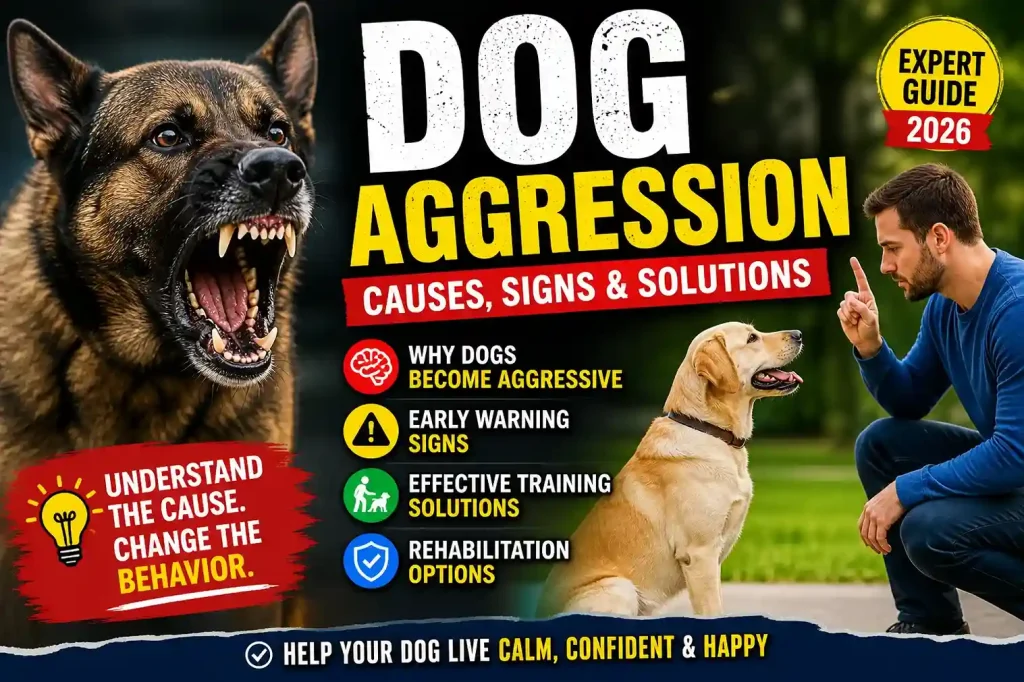
🐕 Dog Aggression: Causes, Signs & Solutions
Dog aggression is usually caused by fear, anxiety, lack of socialization, or confusion—not a “bad” personality. Understanding the root cause is the first step to fixing it.
⚠️ Early Warning Signs
- Growling or snapping
- Stiff body posture
- Barking and lunging
- Showing teeth
- Avoiding or freezing behavior
🧠 Common Causes
- Fear and anxiety
- Lack of early socialization
- Frustration (leash reactivity)
- Resource guarding
- Inconsistent training at home
✅ How to Fix Dog Aggression
- Identify triggers first
- Use positive reinforcement training
- Practice controlled exposure
- Stay consistent at home
- Work with a professional trainer if needed
💡 Key Insight: Dog aggression is a communication signal. When you understand the cause, you can change the behavior.
What Is Dog Aggression?
Dog aggression refers to behaviors intended to create distance or defend against a perceived threat.
These behaviors may include:
- Growling
- Barking aggressively
- Lunging
- Snapping
- Biting
But here’s the key insight:
👉 Dogs use aggression as communication.
They are not trying to be “bad.” They are trying to say:
- “I’m uncomfortable”
- “I feel threatened”
- “Give me space”
When this communication is ignored, the behavior escalates.
Why Dog Aggression Happens (Root Causes)
1. Fear-Based Aggression
The most common cause of dog aggression is fear.
A fearful dog reacts aggressively because it believes:
“If I don’t act, something bad will happen.”
Common triggers:
- Strangers
- Loud noises
- New environments
- Sudden movements
2. Lack of Socialization
Dogs that were not properly socialized as puppies often struggle later in life.
Without early exposure to:
- People
- Other dogs
- Different environments
…the dog does not learn how to respond calmly.
👉 Result: uncertainty → anxiety → aggression
3. Frustration and Leash Reactivity
Some dogs appear aggressive but are actually frustrated.
Example:
- A dog wants to greet another dog
- The leash prevents it
- Frustration builds → barking/lunging
This is called reactive behavior, not true aggression.
4. Resource Guarding
Dogs may become aggressive when protecting:
- Food
- Toys
- Territory
- Owners
This behavior comes from instinct:
“This is mine. I need to protect it.”
5. Genetics and Breed Traits
Some breeds were historically developed for:
- Guarding
- Protection
- Herding
This does not make them “bad,” but it means:
👉 They may react more strongly to threats
6. Inconsistent Training at Home
Dogs need clear, consistent rules.
If:
- Behavior is allowed one day
- Corrected the next
…the dog becomes confused.
Confusion leads to stress, and stress often leads to aggression.
Early Warning Signs of Dog Aggression
Aggression rarely starts with biting.
Dogs show early signals first, but many owners ignore them.
Key warning signs:
- Stiff body posture
- Growling
- Showing teeth
- Avoiding eye contact
- Sudden freezing
- Snapping without contact
👉 These are not “small issues.”
They are early-stage communication signals.
Ignoring them allows the behavior to grow stronger.
Dog Aggression vs Protective Behavior
Many people confuse aggression with protection—but they are very different.
| Aggressive Dog | Protective Dog |
|---|---|
| Reacts emotionally | Responds calmly |
| No control | Controlled behavior |
| Driven by fear | Driven by training |
| Unpredictable | Predictable |
👉 A protective dog is trained.
👉 An aggressive dog is reacting.
This distinction is critical.
A Real-Life Example
Consider a young dog who:
- Barks at visitors
- Hides behind furniture
- Avoids interaction
At first, this seems harmless.
But over time:
- Barking turns into lunging
- Lunging turns into snapping
Why?
👉 Because the dog keeps practicing the same behavior
👉 And no one addresses the root cause
This is how aggression develops in real life.
How to Train an Aggressive Dog
Step 1: Identify Triggers
You must first understand:
👉 What causes the reaction?
Common triggers:
- Other dogs
- Strangers
- Food situations
- Loud environments
Without this step, training will fail.
Step 2: Change the Emotional Response
Training is not about punishment.
It’s about:
👉 Teaching the dog a new response
Example:
Instead of barking → look at owner
Instead of lunging → sit calmly
This is done through:
- Positive reinforcement
- Controlled exposure
- Repetition
Step 3: Use Structured Training
Effective training includes:
- Obedience commands
- Focus exercises
- Controlled social exposure
Consistency is more important than intensity.
Step 4: Work with a Professional Trainer
For serious aggression:
👉 Professional help is essential
A trained behavior specialist can:
- Identify root causes faster
- Create structured programs
- Prevent mistakes
Dog Aggression Rehabilitation
Severe cases require structured rehabilitation programs.
These programs:
- Use controlled environments
- Provide daily training
- Reinforce calm behavior
Benefits:
- Faster progress
- Consistency
- Expert supervision
Building Confidence in Aggressive Dogs
Confidence reduces aggression.
Dogs become aggressive when they feel:
- Unsure
- Confused
- Out of control
Confidence-building activities:
- Obedience training
- Structured walks
- Puzzle games
- Agility exercises
👉 A confident dog reacts less
👉 An anxious dog reacts more
The Role of the Owner
This is where most people fail.
👉 Training does not end with the trainer
👉 It continues at home
What you must do:
- Stay consistent
- Reinforce rules daily
- Remain calm
- Avoid mixed signals
Dogs learn through repetition—not occasional effort.
Common Mistakes to Avoid
If you want real results, avoid these:
❌ Punishing aggression
❌ Ignoring early warning signs
❌ Inconsistent rules
❌ Forcing interactions
❌ Delaying training
✔ Instead:
- Stay patient
- Stay consistent
- Focus on understanding
Practical Daily Routine for Improvement
Here’s a simple routine:
Morning:
- Structured walk
- Basic commands
Afternoon:
- Mental stimulation (games/toys)
Evening:
- Controlled exposure (if safe)
- Reinforcement training
👉 Keep it simple
👉 Keep it consistent
Can Dog Aggression Be Fixed?
Yes—in most cases, it can be improved significantly.
But:
- It takes time
- It requires consistency
- It needs the right approach
Some dogs may always need management, but:
👉 Almost all dogs can become calmer and safer
When to Seek Immediate Help
You should contact a professional if:
- Your dog has bitten someone
- Aggression is increasing
- You feel unsafe
- You cannot control the dog
👉 Do not wait
👉 Early help prevents serious problems
Conclusion
Dog aggression is not a dead end.
It is a signal.
A signal that something is:
- Wrong
- Confusing
- Overwhelming for the dog
When you stop seeing aggression as a problem—and start seeing it as communication—everything changes.
With the right approach:
- Understanding
- Training
- Consistency
…dogs can transform.
👉 From reactive → to calm
👉 From fearful → to confident
And that transformation is not rare—it happens every day.


